
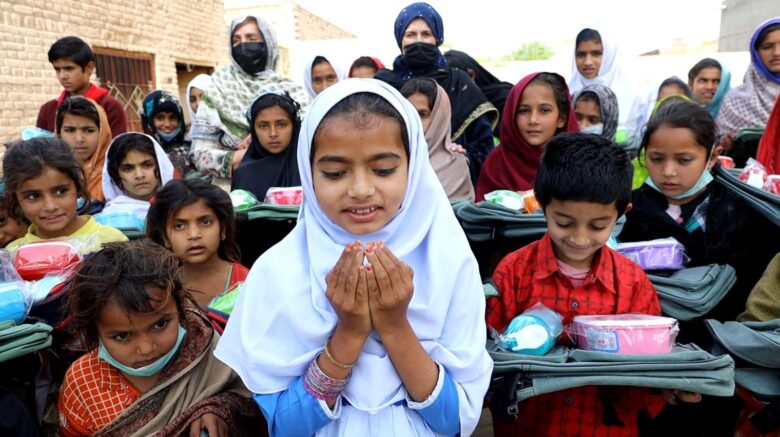
Nestled across the fertile Indus-plain, Punjab is Pakistan’s most populous and agriculturally productive province. Fed by the five life-giving rivers that inspire its very name, Punjab’s alluvial soil supports vast fields of wheat, rice, cotton, and citrus, making the region the country’s breadbasket and textile engine.
Landscape & Climate
Stretching roughly 205 000 km² (79 000 sq mi), Punjab ranges from the snow-fed Himalayan foothills in the north to the semi-arid Cholistan Desert in the south. Summers are hot and dry, while the southwest monsoon (July–September) delivers the bulk of annual rainfall—crucial for the canal network that irrigates more than 70 % of the land.
People & Demographics
Home to more than 120 million residents, Punjab accounts for over half of Pakistan’s population and workforce. Rapid urban growth has produced thriving cities such as Lahore, Faisalabad, Rawalpindi, and Gujranwala, while two-thirds of Punjabis still live in rural communities tied to farming or agro-industry.
A global diaspora of ≈ 10 million Punjabis—settled from the Gulf to North America and Europe—maintains deep cultural and economic links through remittances, philanthropy, and vibrant cultural exchanges.
Culture & Heritage
From the ruins of Harrapan sites like Harappa to the Mughal grandeur of the Lahore Fort and the spiritual magnetism of the Sikh shrine at Nankana Sahib, Punjab’s heritage spans millennia. Punjabi is the dominant mother tongue; yet Urdu, Saraiki, Potohari, and English are widely spoken, reflecting the province’s rich tapestry of sub-cultures.