
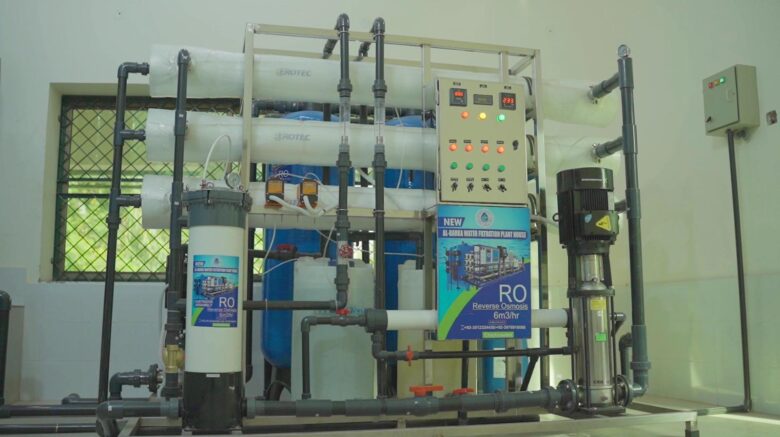
RO Water Plants by Rahe Insaniyat – Clean Water at the Community Level
Clean water is one of the most basic needs of any family, yet in many parts of Pakistan, safe drinking water is still difficult to access consistently. Communities may rely on groundwater or local supply sources that can be affected by contamination, salinity, or poor infrastructure. For households already managing financial pressure, buying safe water daily can become an ongoing burden.
This is where a community-level solution matters. A well-planned RO water plant in Pakistan can help reduce daily risk, improve access, and provide a more reliable source of filtered drinking water close to home. Rahe Insaniyat’s work in Punjab includes clean water initiatives as part of a broader humanitarian mission that also covers hand pumps, ration support, health, and empowerment programs. On its website, Rahe Insaniyat highlights clean water work and reports multiple RO water plants and thousands of hand pumps as part of its impact portfolio.
This article explains why RO plants are important, how Rahe Insaniyat’s RO Water Plant Program supports communities, and how supporters can contribute to long-term clean water infrastructure.
[IMAGE PLACEHOLDER – Suggested placement: After Introduction]
Alt Text: RO water plant installed by Rahe Insaniyat
Caption: A community RO water plant providing safe drinking water
The Challenge of Unsafe Drinking Water in Pakistan
Pakistan faces a complex water quality challenge. In many areas, the issue is not only water availability, but water safety. Families may have access to water, but that water may not be suitable for drinking without treatment because of dissolved contaminants, microbial risks, or poor storage and distribution conditions.
Public health experts and international organizations have repeatedly linked unsafe water, poor sanitation, and weak hygiene conditions with diarrhoeal illness and other preventable diseases. WHO notes that diarrhoeal disease is strongly associated with lack of safe water, sanitation, and hygiene, and contaminated water remains a major transmission pathway.
In Pakistan, the challenge becomes even more difficult in low-income and underserved communities, where families may not have the resources to install household filtration systems or purchase bottled water regularly. UNICEF Pakistan’s WASH work also emphasizes improving water quality and safe drinking water access as a continuing need in the country.
Groundwater contamination is another major concern in several regions. Pakistan Council of Research in Water Resources (PCRWR) reporting has highlighted arsenic risk in groundwater and documented unsafe sources in surveyed areas, which reinforces the need for local testing and safe treatment solutions rather than assumptions about water safety.
For many families, the daily reality is practical and immediate: children need water before school, elders need safe water for medicine, and households need a dependable source that does not force them to choose between food expenses and clean drinking water. That is why a clean drinking water project at the community level can be more than infrastructure. It can become a health and dignity intervention.
Rahe Insaniyat’s RO Water Plant Program
Rahe Insaniyat’s RO Water Plant Program is designed to support communities where safe drinking water access is limited, unreliable, or unaffordable. The goal is simple and practical: install a community water plant that provides treated drinking water at the local level so families can collect safer water closer to home.
Rahe Insaniyat’s broader clean water mission includes multiple types of interventions because water needs vary by area. In some places, domestic hand pumps may be the right solution. In others, especially where source water quality is poor, a reverse osmosis water filtration system may be more appropriate. This kind of solution-focused approach is important in humanitarian work because one model does not fit every community. Rahe Insaniyat’s site also presents clean water and related welfare programs together, reflecting how water access connects with health, livelihood, and family well-being.
An RO plant is especially useful where water contains dissolved solids or contaminants that require treatment beyond basic sediment filtration. By placing the system at community level, the cost and maintenance burden can be shared or managed in a more organized way than expecting each household to install private filtration.
How RO Water Plants Work (Simple Explanation)
Reverse osmosis water filtration is a treatment process that pushes water through specialized membranes to reduce many dissolved impurities. In a community setup, water typically passes through multiple stages, which may include pre-filtration (to remove larger particles), activated carbon or similar treatment stages, and the RO membrane stage.
In plain language, the system is designed to clean water more thoroughly than a simple filter. It can help improve taste, odor, and overall water quality when the source water is not suitable for direct drinking. The exact system design can vary depending on source water quality and local conditions, which is why site assessment matters before installation.
For communities, the visible result is straightforward: people bring containers, fill them with treated water, and take them home for drinking and cooking use. A properly managed community water plant can create a routine that is both safer and more affordable than ad hoc alternatives.
It is also important to be transparent. RO plants are not “install and forget” machines. They require maintenance, periodic replacement of filters and membranes, and ongoing monitoring to perform well. Any responsible water purification charity Pakistan initiative must plan for operations after installation, not only the opening day.
[IMAGE PLACEHOLDER – Suggested placement: After Program Explanation]
Alt Text: People filling containers from RO water plant
Caption: Clean and affordable water access for local families
Where These RO Plants Are Installed
Community RO plants are typically most useful in areas where households face a combination of water quality and affordability issues. These may include settlements with saline or contaminated groundwater, localities with poor municipal supply quality, or communities where safe water vendors are too expensive for regular use.
Rahe Insaniyat works across Punjab and highlights locations such as Faisalabad, Lahore, and Samundri, while also presenting clean water as a core area of intervention. In practice, site selection for an RO plant should be based on need, local demand, source water conditions, and the feasibility of ongoing operations.
A good community water plant placement also considers access. The plant should be reachable for women, children, and elderly residents who often manage household water collection. Distance matters. Waiting time matters. Safety around the site matters. Humanitarian water infrastructure works best when engineering decisions are made with daily life in mind.
Health, Economic, and Social Impact
The strongest impact of a clean drinking water project is often seen in everyday routines, not just project reports.
Health impact is the most immediate. When families have more reliable access to treated water, they are better positioned to reduce exposure to water-related illness risks linked to unsafe drinking water and poor sanitation environments. While no NGO should overclaim outcomes without formal health studies, improving access to purified drinking water is a widely recognized preventive step that supports household health and child well-being. WHO and UNICEF guidance consistently links safe water access with lower disease burden and better public health protection.
Economic impact follows closely. Families that regularly buy water from informal sources often face recurring costs that strain tight budgets. A local RO water plant in Pakistan can reduce transport time and may lower the cost per container compared with longer-distance or less reliable options, depending on the community model. That means more household resources can stay available for food, education, medicines, or transport.
Time savings also matter more than they may appear in a project summary. If a mother or child spends less time traveling to fetch safe water, that time can shift toward school attendance, home responsibilities, paid work, or rest. This is one of the quiet but meaningful benefits of community infrastructure.
There is also a social impact that deserves attention: dignity. Access to clean drinking water should not feel like a daily struggle. A functioning community water plant gives people a dependable place to collect water in an organized way. It signals that underserved communities are worth investing in with infrastructure that is practical, visible, and lasting.
For Rahe Insaniyat water projects, this aligns with a broader approach to humanitarian support: address urgent needs, but also build systems that improve daily life over time.
[IMAGE PLACEHOLDER – Suggested placement: After Impact Section]
Alt Text: Children drinking clean water from RO plant
Caption: Improved health outcomes through purified water
Sustainability, Maintenance, and Community Ownership
The long-term value of an RO plant depends on what happens after installation. This is where many clean water projects succeed or fail.
Sustainability starts with realistic planning. A community RO system needs a maintenance plan, responsible operators, and a clear process for servicing filters, checking performance, and managing repairs. If these details are ignored, even a well-built plant can stop serving people effectively.
A responsible model includes regular monitoring of system condition and water quality checks where possible. It also includes financial planning for consumables and repairs. Some communities use a low-cost user fee model to support operations, while others may rely on donor support or a hybrid approach. The right model depends on local context, affordability, and management capacity.
Community ownership is equally important. When local residents understand the purpose of the plant, help protect the site, and trust the system, the project is more likely to remain functional. Ownership does not always mean full technical management; it can also mean participation in oversight, reporting issues, and ensuring fair access.
For development partners and donors, this is a key point: funding a community water plant should include support for sustainability, not just construction. In practical terms, long-term clean water infrastructure is built through installation plus maintenance plus accountability.
This is also where internal program coordination matters. Clean water efforts can complement other interventions. For example, households supported through the Rahe Insaniyat Ration Distribution Program may also benefit significantly from nearby access to safe drinking water, because nutrition and safe water are deeply connected in household health outcomes. Likewise, the Rahe Insaniyat Hand Pump Program and larger RO installations can serve different needs within the same region, depending on water quality and geography.
How You Can Support RO Water Projects
Clean water infrastructure is one of the most meaningful areas for long-term giving because the impact is practical, visible, and community-wide.
There are several ways supporters can help strengthen a water purification charity Pakistan effort like Rahe Insaniyat’s RO Water Plant Program.
Plant sponsorship is one of the strongest options for individuals, families, and groups who want to fund a major community asset. A sponsored plant can create ongoing benefit for households who need affordable access to treated water.
Direct donations also matter. Not every contribution needs to fund a full installation. Donations can support system components, maintenance costs, upgrades, or expansion of existing Rahe Insaniyat water projects in underserved areas.
Partnerships are another important route. Businesses, community organizations, and overseas Pakistanis can collaborate with Rahe Insaniyat to support clean drinking water project planning, local implementation, and long-term maintenance support. Development partners can also contribute expertise in monitoring, operations planning, or community engagement.
Awareness-building is often underestimated. Sharing verified project updates, introducing donors to the Rahe Insaniyat Clean Water Projects work, and directing supporters to the Donation page can help build sustained support rather than one-time attention.
For readers exploring the organization’s wider mission, it is also helpful to learn how clean water connects with the Rahe Insaniyat Hand Pump Program and the Rahe Insaniyat Ration Distribution Program. Humanitarian needs are interconnected, and integrated support can make community outcomes stronger.
Donate Now to Provide Monthly Ration Support
Families supported through ration distribution often benefit from Rahe Insaniyat’s home construction initiatives for deserving individuals, which help provide safe and dignified shelter. Learn more at https://rahe-insaniyat.org/home-for-deserving/
Health challenges can deepen food insecurity. Rahe Insaniyat addresses this through health-focused welfare initiatives that support vulnerable families in managing medical needs. Details are available at https://rahe-insaniyat.org/health/
To help families move toward self-reliance, Rahe Insaniyat also runs livelihood and social empowerment programs that support sustainable income opportunities. Explore these efforts at https://rahe-insaniyat.org/empowerment/
Together, these Rahe Insaniyat welfare projects create a connected support system that delivers both immediate relief and long-term resilience.
Really nice work.