
Empowerment for Deserving People by Rahe Insaniyat – Building Self-Reliance
For families living under constant financial pressure, relief matters. A ration package can protect a home for a month. Medical support can save a life in a crisis. But when the crisis becomes daily life, temporary help is not enough.
That is where empowerment begins. It means helping a person return to work, restart earning, and regain stability through a practical asset and consistent guidance.
Rahe Insaniyat’s Empowerment Program for Deserving People focuses on tools, mobility, and small-income pathways. The goal is not charity for a day. The goal is self-reliance with dignity, responsibility, and long-term impact.
Why Economic Empowerment Is Essential for Deserving Families
Poverty is not only a lack of money. It is a chain of limitations that grows tighter over time.
When income is unstable, families make painful trade-offs. Children miss school to support the household. Parents delay medical care. Debt increases. A single emergency can push a hardworking family into years of hardship.
Economic empowerment breaks this cycle by changing the core problem: the absence of reliable earning.
Empowerment for deserving people in Pakistan is also about dignity. Most people do not want to depend on others. They want a chance to work, to contribute, and to stand on their own feet.
A livelihood opportunity, even a small one, improves decision-making inside the home. It reduces stress. It protects children. It helps families plan rather than survive.
This is why income-generating projects are among the most practical forms of social support. A carefully chosen tool or asset can become the start of stable household income, especially when paired with local follow-up and community involvement.
Rahe Insaniyat’s Empowerment Program
Rahe Insaniyat empowerment projects are designed for real life in Punjab. They focus on assets that people can use immediately, without complex training or high operating costs.
The program supports deserving individuals based on need, readiness to work, and the suitability of the asset for their local environment. The intention is simple: help a person earn consistently and support their family with pride.
Rickshaws for Livelihood and Transport
For many breadwinners, the problem is not willingness to work. The problem is access.
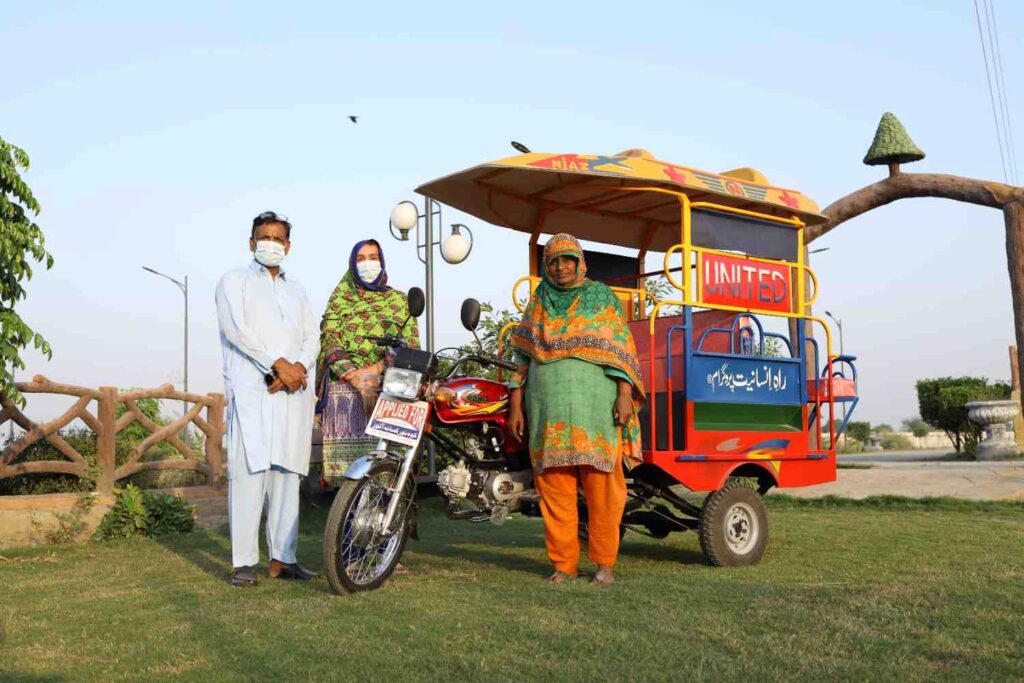
A rickshaw can become a daily source of income for someone who has driving experience or can learn quickly. It can support passenger transport, small deliveries, and routine travel routes in busy areas.
A rickshaw support program can also reduce hidden costs for families. When the earning member has reliable transport, they lose fewer working hours, spend less on commuting, and can reach better opportunities.
Rahe Insaniyat approaches rickshaw support responsibly. The asset is meant for livelihood, not luxury. It is selected with the person’s capacity, safety, and realistic earning potential in mind, without exaggerated promises.
Support may include basic guidance on maintenance habits and responsible use, so the asset remains functional and productive over time.
Selling Carts and Small Shops
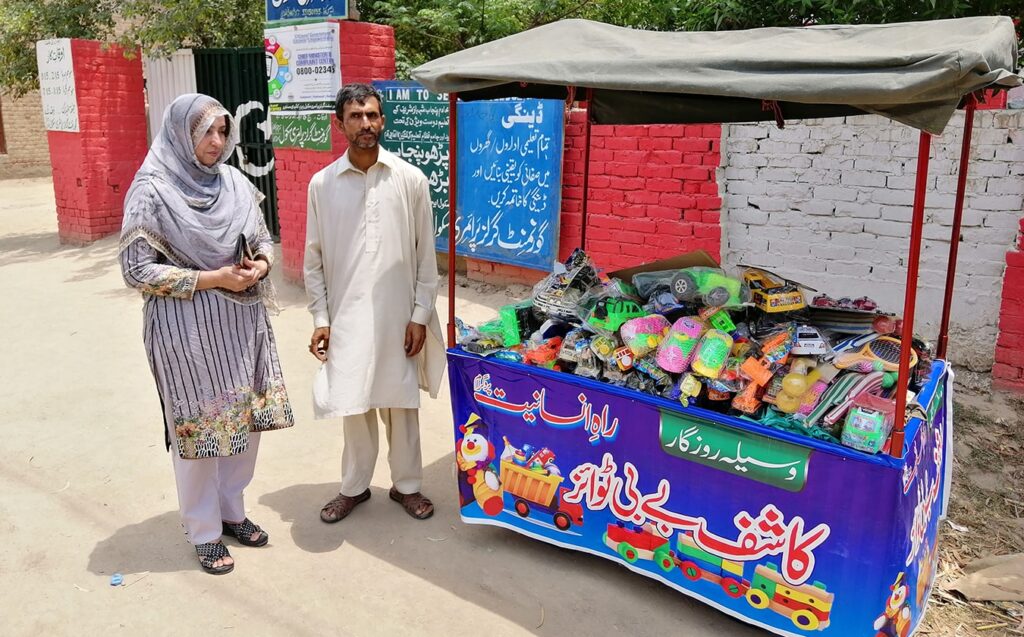
Small trade is one of the strongest pathways to stability for low-income families. A modest setup can create daily cash flow, which is often more useful than uncertain monthly income.
This is why small business support for poor families can be life-changing when it is done thoughtfully.
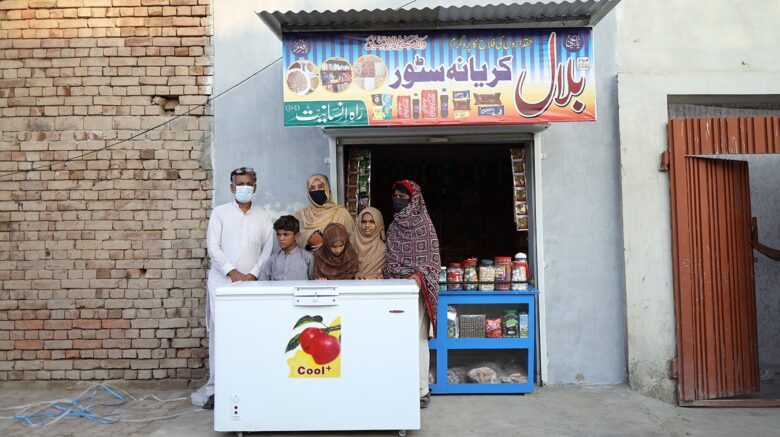
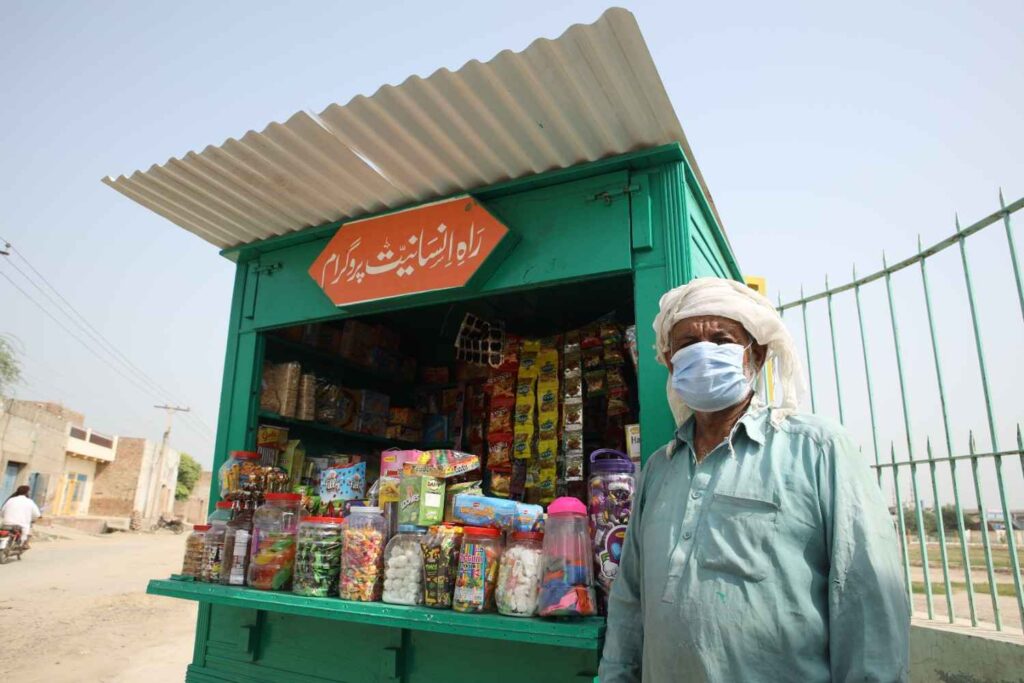
Selling carts can support street-based work such as snacks, fruit, vegetables, beverages, or household goods, depending on the area. These options can work for people who cannot travel far, who have limited capital, or who need flexible working hours.
In some cases, a small shop setup can help a family move from unstable labor work to consistent self-employment. Even a basic shop can support a household when it is placed in the right location and matched with the person’s experience.
Rahe Insaniyat does not treat business support as a shortcut. The program focuses on practical planning, realistic product selection, and community-based verification to ensure the support truly becomes income-generating.
These income-generating projects are meant to build ownership. When someone earns through their own effort, the benefits reach the entire family, and the confidence lasts longer than the financial value of the asset.
Cycles for Mobility and Access to Work
In many communities, a cycle is not a simple vehicle. It is access.
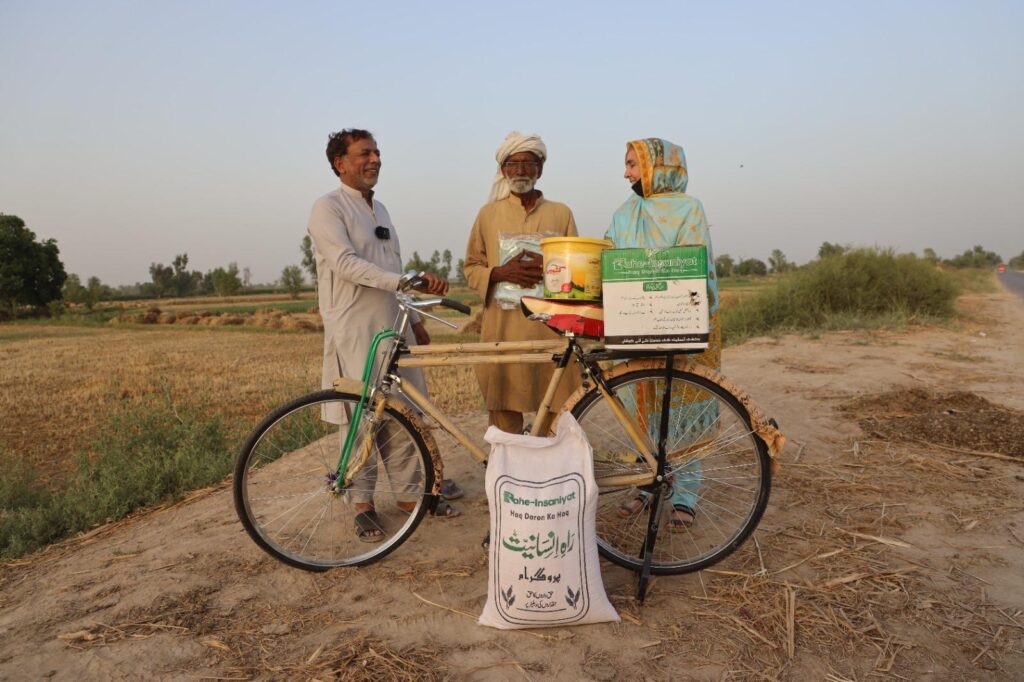
A cycle can help a student reach school. It can help a worker reach a job site. It can help a small vendor deliver goods. It can reduce daily commuting costs that quietly consume a large part of a low-income household’s earnings.
For people in rural and semi-urban areas, a cycle can also mean safety and time savings. When distance becomes manageable, work becomes possible.
Cycles are often among the most cost-effective empowerment tools because they combine affordability with daily utility. They support employment, education, and family responsibilities at once.
Rahe Insaniyat includes cycles within its livelihood support charity Pakistan initiatives because they align with the program’s values: practical help, dignity, and lasting usefulness.
Impact on Families and Communities
Empowerment is easier to understand when we see what changes inside a home.
Consider a father who used to rely on irregular labor work. Some weeks he found work, other weeks he returned home empty-handed. With a livelihood asset such as a rickshaw, he can work more consistently, plan his day, and rebuild stability over time.
Consider a widow supporting children with sewing or small home work but struggling to cover basic expenses. A selling cart or small shop support can create a daily earning stream, allowing her to manage household needs with greater confidence and less dependence.
Consider a young person who has skills but no way to reach opportunity. A cycle can turn long walking hours into productive working hours. It can also reduce fatigue, increase punctuality, and improve the person’s ability to hold steady work.
The impact is not limited to one family.
When households become more stable, children’s education improves. Health decisions improve. Local markets strengthen. Neighbors see possibility rather than despair.
This is why empowerment for deserving people in Pakistan is also community development. It turns support into a moving force, where one household’s stability contributes to the wellbeing of others.
Rahe Insaniyat’s approach keeps beneficiaries at the center as capable, responsible people. The program respects effort. It recognizes potential. It supports work, not dependence.
Sustainability, Responsibility, and Follow-Up
Empowerment initiatives only remain meaningful when they are handled with responsibility.
Rahe Insaniyat aims to identify deserving cases through local knowledge, volunteer input, and community references. This helps reduce errors and ensures that support reaches those who are ready to use the asset for livelihood.
Asset-based support also requires careful matching.
A rickshaw may suit someone with driving experience and safe routes nearby. A selling cart may suit someone with product knowledge and a suitable location. A cycle may suit someone who needs mobility to access work or education reliably.
After support is provided, follow-up matters.
Basic check-ins help ensure the asset is being used for its intended purpose. They also help the organization learn what works best in different areas. Sustainability comes from learning, improving selection methods, and strengthening trust between donors, volunteers, and communities.
Rahe Insaniyat also believes in responsible giving that aligns with other essential programs.
Some families may need immediate food security before they can focus on earning. That is where the Rahe Insaniyat Ration Distribution Program can stabilize a household.
Some individuals may face health barriers that prevent work. That is where the Rahe Insaniyat Health Support Program becomes part of the empowerment journey.
Some homes may be unsafe, incomplete, or unstable. That is where Rahe Insaniyat Welfare Construction Initiatives help protect dignity and safety, so livelihood efforts can grow.
Empowerment works best when it is connected to real needs, not isolated from them.
How You Can Support Empowerment Initiatives
Sustainable empowerment is built through consistent supporters, not one-time attention.
You can contribute by supporting Rahe Insaniyat empowerment projects in ways that match your capacity and comfort.
Some donors prefer to fund a specific asset type, such as a cycle, a selling cart setup, or a rickshaw. Others prefer to support the broader empowerment program so the organization can allocate resources based on real-time needs and verified cases.
Volunteers can also play a meaningful role. Community-based verification, follow-ups, and local guidance are essential for responsible impact. When local people support local change, the results are stronger and more sustainable.
Overseas Pakistanis often want their support to create long-term benefit for families back home. Empowerment is one of the most practical ways to do that, because it helps households move toward independence.
To learn how to support this work, visit the Donation page and choose an option aligned with empowerment and livelihood support.
Donate Now to Provide Monthly Ration Support